



Mold Components Guide: Types, Functions, and Buying Checklist
Mold components are the precision parts that control alignment, cooling, feeding, and ejection inside injection molds. Buyers should evaluate component materials, tolerances, heat treatment, replacement frequency, and supplier delivery capability before sending an RFQ. Standard components reduce lead time and maintenance complexity, while custom components improve fit for specialized production requirements.
A mold can only perform as well as the parts inside it. Poor component selection often leads to flash defects, alignment issues, unexpected downtime, or expensive replacements. Buyers who understand how mold systems work can make better sourcing decisions, avoid production delays, and compare suppliers with more confidence. This guide explains the main mold components, how they function, and what to check before placing an order.
What are mold components and why do they matter?
Mold components are the individual precision parts that control alignment, cooling, ejection, and cavity formation inside a mold. Their quality affects cycle time, part accuracy, mold lifespan, and maintenance frequency.
Injection molds contain many moving and fixed parts that work together during production. These parts guide molten plastic, shape the final product, cool the mold, and eject finished components safely. Even a small tolerance issue can affect production consistency.
The most important systems include the mold base, cavity and core inserts, guide components, cooling channels, and ejector systems. Each one supports mold stability during repeated production cycles. You can explore broader mold component systems to understand how these systems interact across full mold assemblies.
High-quality components also reduce maintenance pressure. A low-cost ejector pin with weak heat treatment may wear out quickly and stop production unexpectedly. For high-cycle manufacturing, repeatable precision matters more than the lowest upfront component price.
What are the main types of mold components?
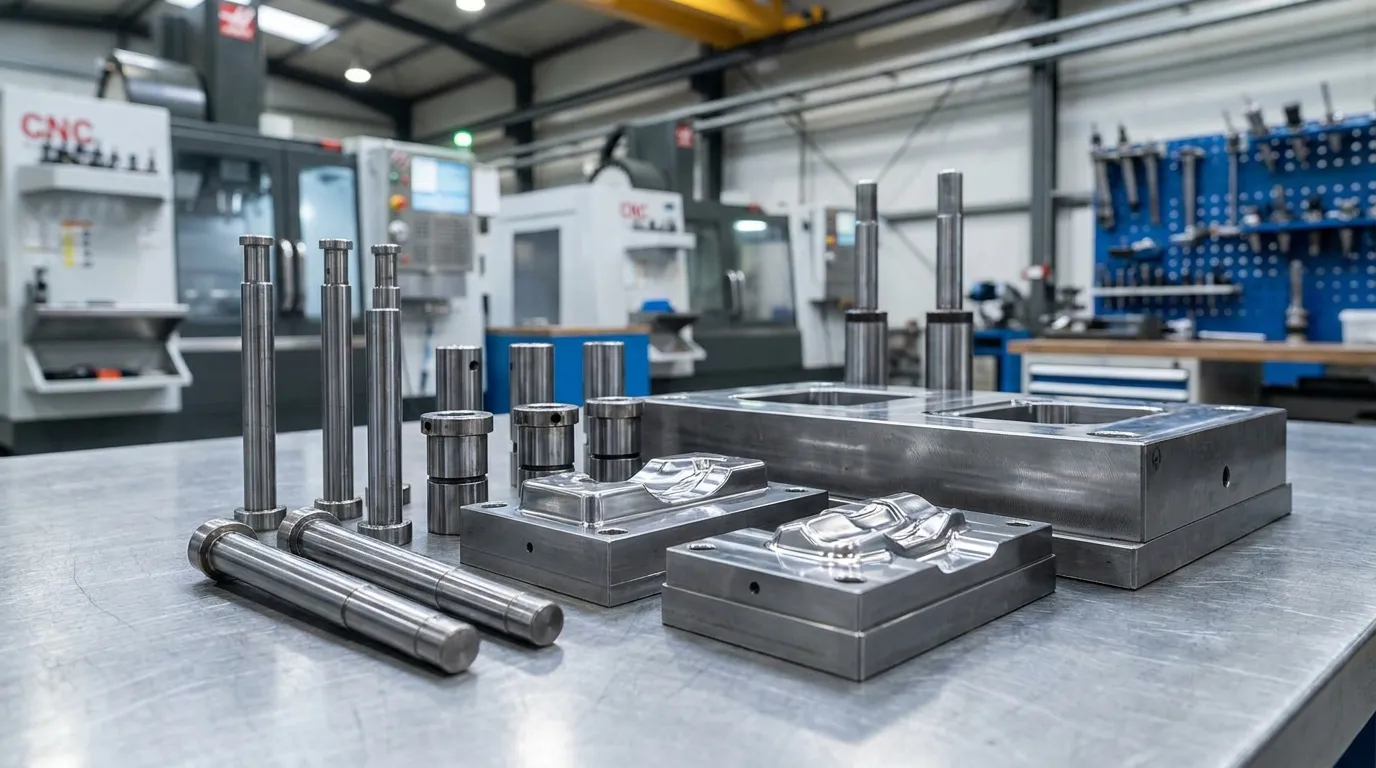
The main mold component categories include mold bases, cavity and core systems, ejector systems, cooling channels, venting systems, and guide components. Each system controls a different stage of molding accuracy and production efficiency.
Every injection mold combines structural and functional systems. Structural parts hold the mold together, while functional systems manage plastic flow, cooling, and ejection during production.
Structural components
| Component | Main Function | Common Concern |
|---|---|---|
| Mold base | Supports the full mold assembly | Alignment stability |
| Cavity insert | Forms external part shape | Wear resistance |
| Core insert | Forms internal geometry | Precision machining |
| Guide pins | Align mold halves | Friction wear |
| Bushings | Support guiding movement | Clearance tolerance |
The mold base acts as the foundation. Cavity and core inserts shape the finished product, while guide pins and bushings maintain alignment during repeated opening and closing cycles.
Functional systems
| System | Purpose | Production Impact |
|---|---|---|
| Runner system | Directs molten plastic | Fill consistency |
| Cooling channels | Remove heat | Cycle time |
| Venting system | Releases trapped air | Surface quality |
| Ejection system | Removes finished parts | Damage prevention |
Cooling and venting systems often receive less attention during RFQs, but they strongly affect production efficiency. Poor cooling design can increase cycle time significantly, while weak venting may create burn marks or trapped gas defects.
For a broader explanation of plastic injection mold structure, it helps to review how these systems work together in complete tooling assemblies.
Which mold components wear out fastest?
Ejector pins, bushings, punches, and guide components usually wear out first because they handle repeated friction, heat, and mechanical stress. Material quality and heat treatment strongly affect replacement frequency.
Moving parts experience constant contact during production cycles. Ejector pins slide repeatedly against steel surfaces, guide bushings absorb alignment pressure, and punches face direct mechanical force. Without proper hardness or lubrication, these components degrade quickly.
An automotive supplier producing high-volume interior clips faced repeated downtime because ejector pins were replaced every two months. The issue was not mold design. The pins used insufficient hardness treatment and wore down under continuous production pressure.
Common high-wear components include:
- Ejector pins
- Guide bushings
- Wear plates
- Punches
- Sprue bushings
Low-cost components are not always the cheapest option long term. For high-cycle molds, stronger heat treatment and better surface finishing often reduce maintenance costs over time. Many manufacturers prioritize durability-focused precision mold parts for this reason.
Standard vs custom mold components: which should buyers choose?
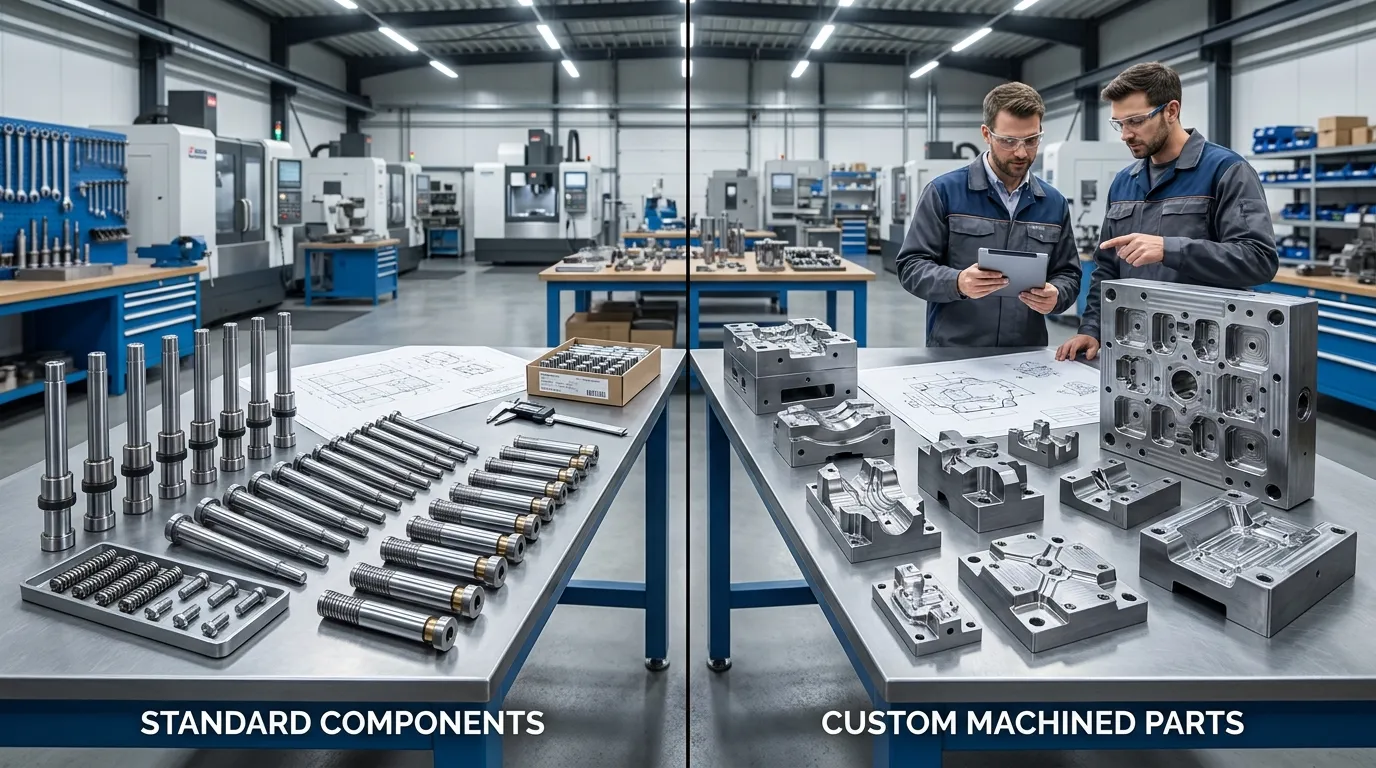
Standard mold components reduce lead time and simplify replacement, while custom components improve fit for specialized applications or tight tolerances. The right choice depends on production volume, complexity, and maintenance priorities.
Standard components work well for many molds because they are easier to source and replace. Suppliers often keep standard ejector pins, guide posts, and bushings in stock, which shortens delivery timelines and reduces downtime risk.
Custom components become necessary when molds require unusual geometry, unique tolerances, or specialized production conditions. Medical and electronics molds often use custom-machined parts to maintain tighter dimensional control.
When standard parts work best
| Best Fit | Why Standard Components Help |
|---|---|
| General consumer products | Faster replacement |
| Moderate production volumes | Lower tooling cost |
| Maintenance-heavy environments | Easier inventory management |
| Tight project timelines | Shorter lead times |
A packaging manufacturer reduced downtime by replacing custom bushings with stocked standard parts. Replacement time dropped from three weeks to four days because the supplier already carried inventory.
When custom machining is necessary
| Best Fit | Why Custom Components Help |
|---|---|
| Medical tooling | Higher precision |
| Complex geometries | Better fit |
| High-pressure molding | Improved durability |
| Specialty resins | Material compatibility |
Standard components are not always the safest choice. They reduce sourcing complexity, but custom parts may improve stability for high-precision molds where alignment tolerance is critical. A consumer electronics supplier improved part consistency after switching to custom guide posts with tighter tolerances.
Buyers reviewing custom mold accessories should compare long-term maintenance costs, not just initial component pricing.
What materials are commonly used for mold components?
Tool steel is the most common material for mold components because it balances hardness, machinability, and wear resistance. Different steel grades perform better under different production conditions, especially when molds run high volumes or abrasive resins.
Heat treatment also matters. A well-machined component can still fail early if hardness levels are inconsistent. Many suppliers focus heavily on machining quality but overlook long-term wear stability during heat treatment.
Mold steel selection factors
| Factor | Why It Matters |
|---|---|
| Hardness | Improves wear resistance |
| Machinability | Affects manufacturing precision |
| Corrosion resistance | Helps with moisture-sensitive environments |
| Heat stability | Reduces deformation risk |
| Surface finish | Supports smooth part release |
A mold running glass-filled plastic resin usually needs stronger wear resistance than one producing simple consumer packaging. Buyers should confirm both steel grade and heat-treatment specifications during RFQ review.
Fast delivery means little if tolerances shift after repeated production cycles. Consistent material quality often matters more than short-term lead time savings.
What should buyers check before sending an RFQ?
Before requesting a mold component quote, buyers should confirm dimensions, tolerances, material grades, heat treatment requirements, surface finish, and delivery timelines. Missing specifications often cause delays, inaccurate pricing, or compatibility problems.
Incomplete RFQs create confusion for both buyers and suppliers. Missing tolerances or unclear material requirements can lead to revised quotes, delayed production, or components that fail during assembly.
The safest approach is to standardize RFQ information before contacting suppliers.
Mold Component RFQ Checklist
| RFQ Item | Why It Matters |
|---|---|
| Technical drawings | Confirms geometry |
| Tolerance requirements | Prevents fit issues |
| Material grade | Supports durability |
| Heat treatment spec | Improves lifespan |
| Surface finish | Affects mold performance |
| Quantity required | Impacts pricing |
| Delivery target | Helps inventory planning |
| Inspection standards | Confirms QC expectations |
A medical mold project experienced customs delays because component drawings and invoices used inconsistent descriptions. The supplier corrected documentation, but production lost nearly two weeks waiting for replacement approval.
Buyers should also ask suppliers about stocked inventory. A supplier with standard components already available can often prevent emergency shutdowns caused by replacement delays.
How do delivery and customs issues affect mold component sourcing?
Incorrect HS codes, missing invoices, and incomplete customs documentation can delay mold component shipments and interrupt production schedules. Buyers should verify export paperwork and supplier inventory before approving urgent orders.
Many sourcing delays happen after production is already complete. Customs clearance issues, incorrect classification codes, and missing paperwork can stop critical replacement components from reaching the factory on time.
Common customs delay causes
- Incorrect HS classification
- Missing commercial invoices
- Incomplete packing lists
- Inspection holds
- Supplier inventory shortages
A mold manufacturer shipping replacement guide bushings for an automotive line used the wrong HS code during export documentation. Customs flagged the shipment for review, adding several days to clearance time and delaying production restart.
Urgent projects benefit from suppliers that maintain inventory locally or regionally. Replacement speed matters most when a production line is already down. Buyers evaluating global sourcing should ask about stock availability before confirming orders.
According to guidance from Bangladesh Customs and international trade references, documentation consistency plays a major role in preventing shipment delays. Even small invoice mismatches can trigger inspections during customs processing.
How should buyers evaluate mold component suppliers?
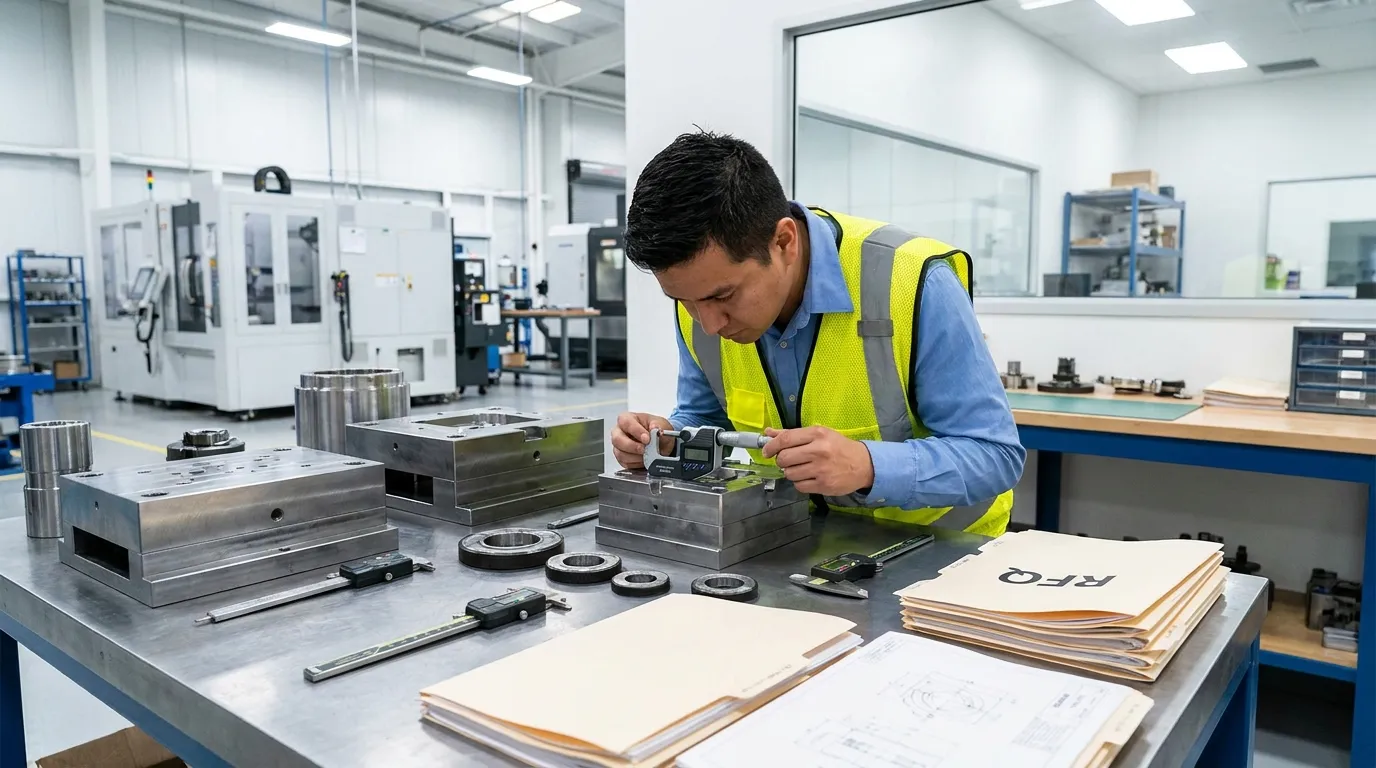
Reliable mold component suppliers should demonstrate precision tolerances, material traceability, inventory capacity, quality inspection systems, and stable delivery performance. Buyers should evaluate long-term replacement support, not only initial pricing.
A supplier may offer competitive pricing but still create problems later through inconsistent machining or delayed replacements. Buyers should focus on repeatability and support, especially for molds running continuous production schedules.
Supplier evaluation checklist
| Evaluation Area | What Buyers Should Verify |
|---|---|
| Tolerance capability | CNC precision standards |
| Material traceability | Steel certification |
| Heat treatment control | Hardness consistency |
| Quality inspection | Measurement systems |
| Inventory support | Replacement availability |
| Export experience | Documentation accuracy |
An electronics manufacturer reduced alignment defects after switching suppliers because the new vendor maintained tighter guide-post tolerances and stronger inspection procedures.
For buyers comparing mold manufacturing applications, supplier flexibility also matters. Different industries require different wear resistance, tolerances, and production speeds. A supplier experienced in automotive tooling may not always be the best fit for medical or electronics molds.
Getting the Next Step Right
Choosing the right mold components is less about finding the cheapest option and more about reducing long-term production risk. Material quality, machining precision, heat treatment, inventory support, and delivery reliability all affect mold performance after installation.
Before sending your next RFQ, review the component system carefully and identify which parts directly affect alignment, wear, and cycle consistency. Strong sourcing decisions early in the process usually prevent expensive downtime later. Buyers who understand mold systems can compare suppliers more confidently and build more stable production operations.
Frequently Asked Questions
What are the main systems of a mold?
The main mold systems include the mold base, feed system, cooling system, venting system, ejection system, and guiding system. Each system supports molding accuracy, cycle efficiency, and consistent part quality.
What are standard mold components?
Standard mold components are pre-manufactured parts made to common industry dimensions and tolerances. They reduce lead time, simplify replacement, and lower sourcing costs compared with fully custom parts.
What are the most important factors when choosing mold steel?
The most important mold steel factors are hardness, wear resistance, machinability, and heat-treatment stability. The correct choice depends on production volume, resin type, and expected mold lifespan.
What causes customs delays for mold component shipments?
Customs delays often happen because of incorrect HS codes, incomplete invoices, missing documentation, or inspection requirements. Delays can interrupt production schedules when replacement components are urgently needed.
Which mold components require replacement most often?
Ejector pins, guide bushings, punches, and wear plates usually require replacement first because they experience repeated friction and mechanical stress. Proper lubrication and heat treatment can extend their service life.
Should buyers choose standard or custom mold components?
Standard components work well for many applications because they reduce cost and replacement complexity. Custom components are better for unusual geometries, specialized tolerances, or high-performance tooling requirements.
Share:


Written By miashuvo
NEWS
GET SERVICE
With quality parts to meet every budget and friendly staff trained to make your visit informative and hassle free.
